
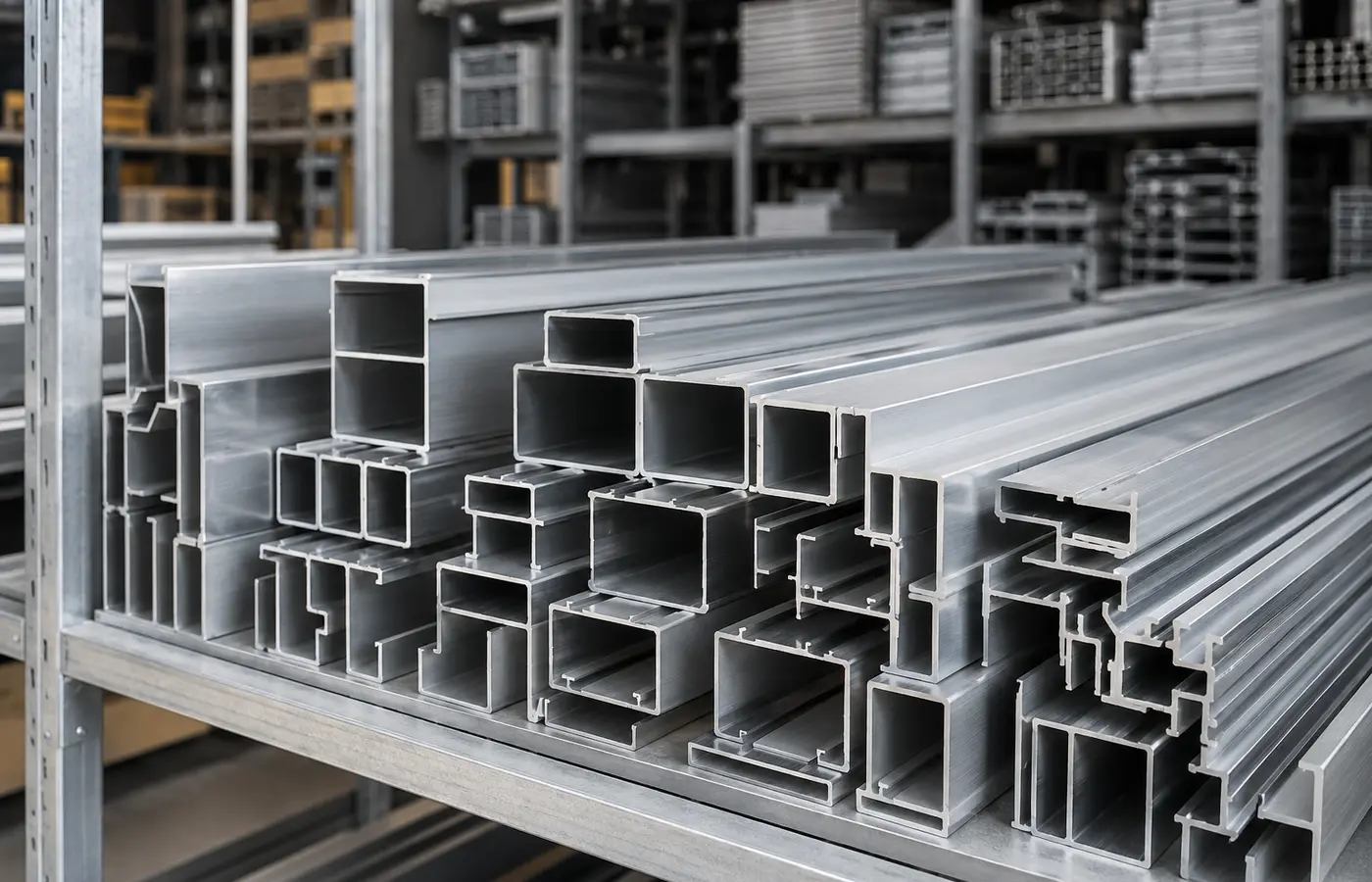
The same envelope does not mean the same performance
Solid, open, semi-closed and multi-void extrusions distribute material differently, changing bending, torsion, connection zones, heat flow and mass. Two profiles with the same outer rectangle may not carry the same load or accept the same accessory.
Define the job first: joinery, furniture, machine frame, decoration, façade support, heat sink or custom fabrication. Structural use requires an engineer to check load, span, support, buckling, fatigue and joints; visual similarity is not a calculation.
1. Define the section with a controlled drawing
A photograph and one ruler dimension cannot reliably identify a complex extrusion. Show outside dimensions, walls, channels, radii, hole centres and critical interfaces with seals, screws, panels or bearings. State straightness, twist, flatness and appearance where they matter.
Extrusion tolerances depend on size, shape, alloy and standard. Tighten only functional dimensions; unnecessary precision adds difficulty and cost. Cut-length tolerance and overall straightness can be as important as the section itself.
2. Do not confuse alloy and temper with the profile name
Aluminium alloys and tempers change strength, formability, machining, welding, anodized appearance and corrosion behaviour. The 6xxx family is common in architectural and structural extrusions, but its alloys and tempers are not automatically interchangeable.
Write the full alloy-temper required by the design. Higher strength is not always better if bending, pressing, machining, welding or later forming is planned. Define certification and traceability before ordering.
3. Verify mass from the actual section area
Cost and installed load often follow mass per metre. Estimating from the outer perimeter misses voids, channels and ribs. Use the supplier's section area or theoretical mass and multiply by ordered length and quantity; control sample length and scale if weighing.
Excess wall raises cost and handling; insufficient wall can impair screw holding, impact resistance, local bearing, welding and finish. Optimize distribution and transitions, not kilograms alone.
4. Resolve connections and thermal movement early
Screws, bolts, rivets, adhesives, interlocks and welds each need edge distance, wall, access and tolerance. An improvised screw in a thin wall or an enlarged slot can weaken the section. Check fastener material and coating for galvanic compatibility.
Long aluminium members expand and contract with temperature. Façades, pergolas and exterior joinery need movement allowance, fixed-sliding points, joints, seals and drainage. Locking both ends can create bowing, noise, fastener stress or leakage.
5. Match mill, anodized or painted finish to the duty
Mill finish may suit concealed interior fabrication. Anodizing creates a controlled oxide finish, while powder or liquid coating adds colour and a barrier. Specify the process standard, class or thickness, colour, gloss and acceptable appearance variation—not just the finish name.
The same colour code can vary with batch, pretreatment, geometry and gloss. Use an agreed sample for visible work. Cutting or machining after finishing exposes edges, so agree the sequence and repair method.
6. Control dissimilar-metal contact at the coast
Salt-laden moisture, water traps and electrical contact between metals can raise corrosion risk. Stainless or galvanized fasteners are not automatically harmless in every aluminium detail; assess the metal pair, area ratio, coatings, isolators and drainage.
Prevent rain and condensation from being trapped. Remove swarf, iron particles and construction chemicals, and use only approved cleaners. Segregate deep scratches, dents, twist, coating gaps and colour variation before installation.
Information for one complete enquiry
Send together:
- Application, structural duty and design loads
- Dimensioned section drawing, critical tolerances and mating parts
- Alloy-temper, certificate and traceability
- Length, quantity, cuts, holes and machining
- Mass per metre or section area
- Mill, anodized or painted finish, colour, gloss and sample
- Joint method, contact metals, movement and drainage
- Packaging, protective film, delivery and unloading