
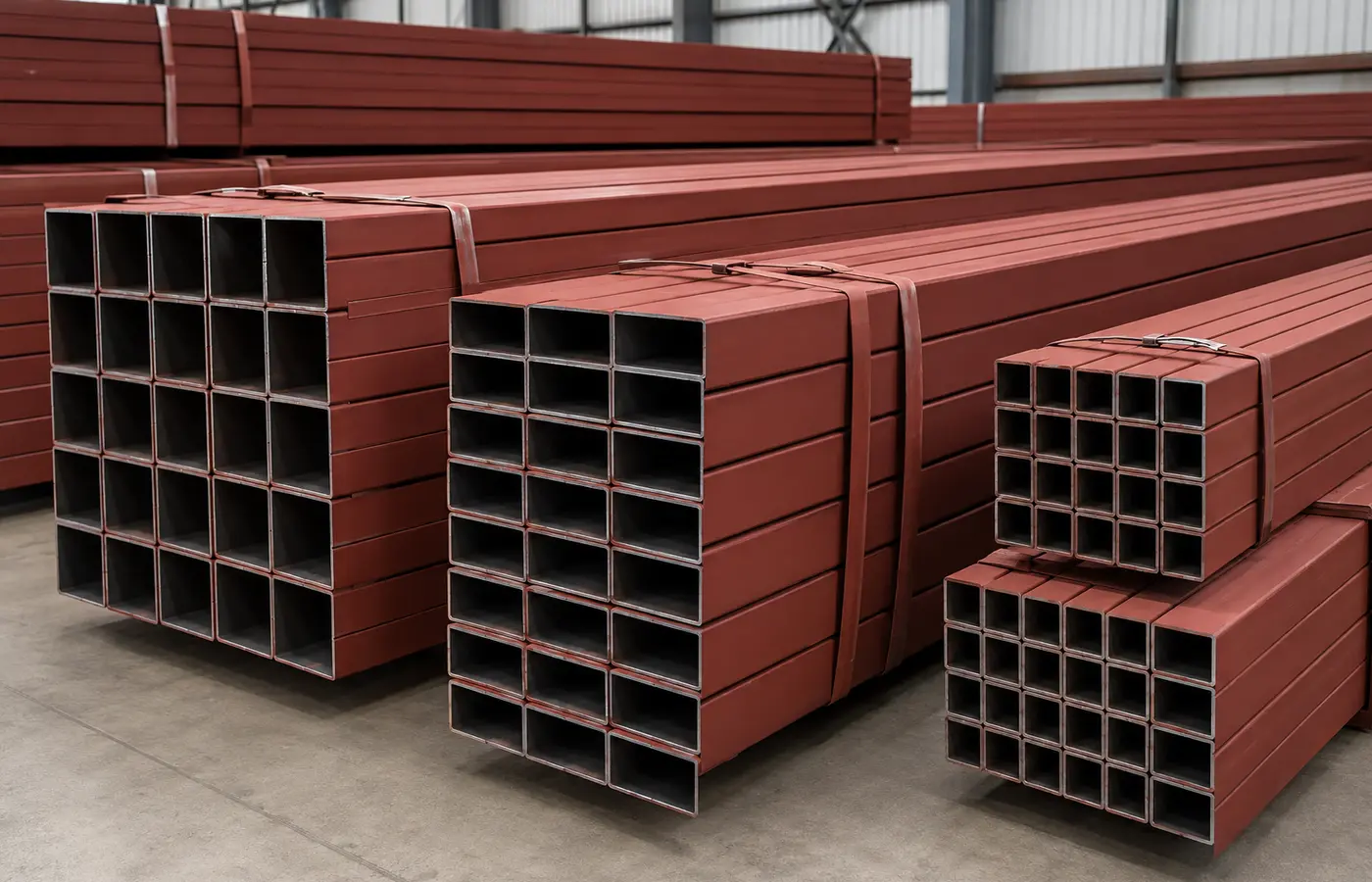
What is a primer-painted hollow section?
A primer-painted hollow section is a square or rectangular steel tube supplied with a protective primer coat applied during production or stock preparation. The familiar red-brown finish commonly comes from a red-oxide primer. It can reduce the first stage of surface preparation and gives fabricators a more consistent starting surface than bare steel.
Primer and topcoat do not perform the same job. Primer prepares the substrate for the coating system that follows; colour, long-term weather resistance and the final appearance depend on a compatible finishing system selected for the service environment.
Where is it commonly used?
The closed hollow-section geometry provides convenient faces for frames and general fabrication. A factory-applied primer can also simplify planning for cutting, assembly and final coating.
- Workshop benches, shelving and non-structural frames
- Gates, garden gates, railings and fence frames
- Canopies, shades and light roof subframes
- Machine bodies, chassis and equipment bases
- Sign frames, stands, partitions and general metalwork
Seven practical selection checks
No single size suits every job. Review these seven points together before requesting a quotation or starting fabrication:
- Section shape: square sections behave similarly about two principal axes, while rectangular sections can be advantageous when correctly oriented for a dominant direction.
- Outside dimensions: frame span, connection points and the intended appearance all influence the section size.
- Wall thickness: do not select by outside dimensions alone; loads, spans, weld details and impact risk also matter.
- Service environment: indoor use, outdoor exposure, coastal air, moisture and chemicals require different protection strategies.
- Connection method: welding, bolting or mechanical fastening changes the hole, plate and tolerance plan.
- Coating system: confirm compatibility between the existing primer and subsequent coats using the coating manufacturer's instructions.
- Length and quantity: consider standard lengths, cutting layout, waste, piece count and total weight together.
Do not overlook cut edges and weld zones
Cutting and welding can damage the primer around edges and joints. Applying a finish over weld spatter, slag, oil or loose coating can reduce adhesion. Clean the affected areas correctly and restore the primer as required by the selected coating system.
Provide suitable ventilation, personal protective equipment and follow the relevant safety data sheets when welding or applying coatings.
Is primer alone enough outdoors?
A primer coat is generally not intended as indefinite final protection outdoors. Rain, ultraviolet exposure, salty air and trapped water increase corrosion risk. In coastal areas such as Kuşadası, closing exposed ends, avoiding water traps, repairing weld zones and applying a suitable finish become especially important.
Select coating type and film build according to the exposure, maintenance plan and the coating manufacturer's technical guidance.
Information to include in a quotation request
A clear request helps the team check dimensions and availability quickly.
- Square or rectangular section
- Outside dimensions and wall thickness
- Required length, number of pieces or approximate total tonnage
- Whether the item will be used indoors or outdoors
- Cutting, delivery or collection requirements