
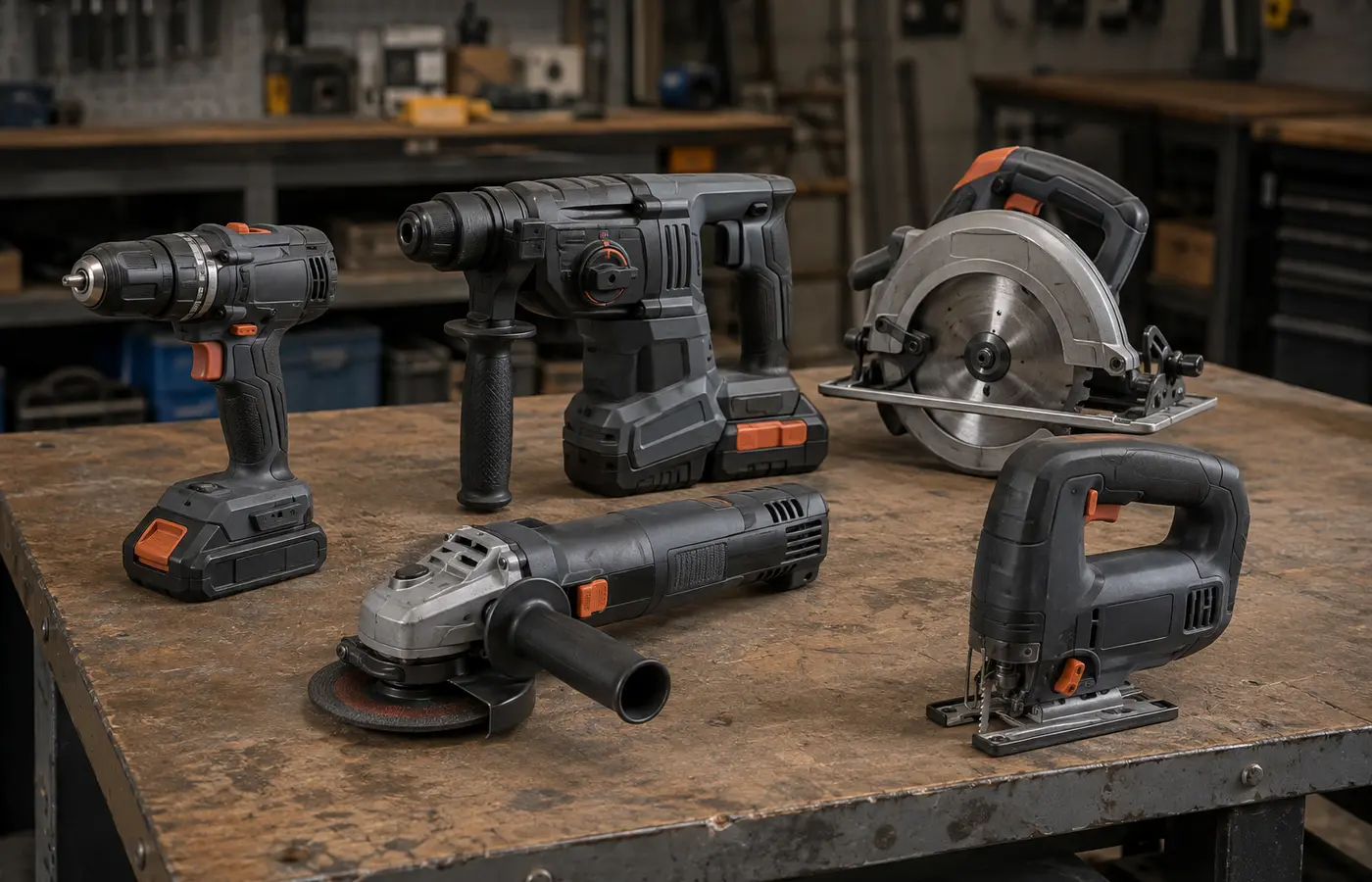
Power or voltage alone does not select the tool
Drills, impact drivers, grinders and saws differ in speed, torque, mechanism, accessory interface and guarding. Define the material, operation, size, duration and access before comparing products.
A powerful tool used for the wrong operation can bind, damage the work and create kickback. Follow the tool and accessory instructions.
1. Match tool, accessory and material
The accessory's rated speed must suit the tool, and diameter, arbor and fastening system must match exactly. Never use a grinding wheel for an unapproved cutting or side-loading task.
Inspect discs, bits and blades for cracks, distortion, moisture or impact damage. Keep every required guard, side handle and base fitted.
2. Choose corded or cordless for the environment
Cordless tools reduce trailing leads but introduce battery capacity, charging, weight and platform compatibility. Corded tools need safe cables, plugs, extensions and site supply.
Protect batteries from impact, water, heat and short circuit. Remove swollen, cracked or overheating packs from service and use only compatible chargers.
3. Perform a pre-use inspection
Check body, switch, guard, handle, chuck, cable, plug, battery mount and accessory. Remove equipment with exposed conductors, burn marks, loose parts, abnormal smell or vibration from service.
Disconnect power before adjustment, cleaning or accessory changes. Repairs and electrical tests require competent people and approved procedures.
4. Secure the work and area
Clamp small workpieces, clear the cutting path and keep leads and people away. Remove combustibles where sparks are produced and provide hot-work controls.
Use a stable platform for two-handed tools and check for concealed electrical, gas and water services before drilling or cutting.
5. Control dust, noise and projectiles
Use suitable eye or face, hearing and respiratory protection. Gloves must suit the operation and must not create entanglement risk around rotating parts.
Use source extraction and compatible dust collection. PPE supports, but does not replace, the correct tool and engineering controls.
6. Manage supply and exposure
An appropriate RCD can provide additional protection but does not remove every risk. Do not repeatedly reset a tripping supply without finding the fault. Size extension leads for current, length and environment.
Sharp, balanced accessories and correct feed reduce heat, vibration and kickback. Plan noise and vibration exposure and act on numbness, tingling or loss of grip.
Purchase checklist
Provide:
- Material, operation, dimensions and duty cycle
- Corded or battery platform
- Speed, torque, impact and capacity
- Compatible accessories and consumables
- Guards, handles, extraction and case
- Wet, height, spark and combustible conditions
- Required PPE and training
- Manual, warranty, maintenance and service