
Identify the deposit correctly
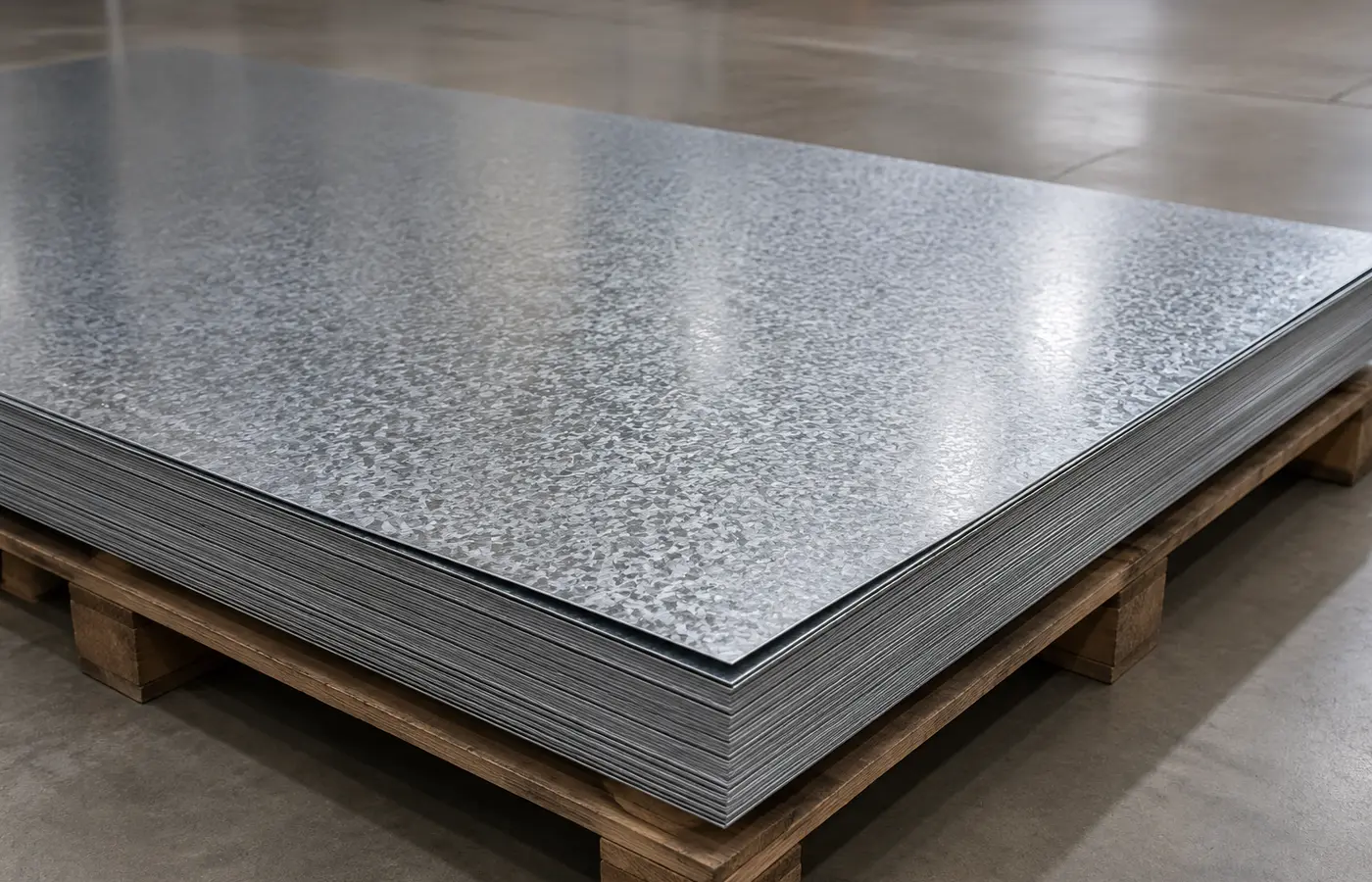
White or grey powder on newly galvanised surfaces is often wet storage stain. It develops when rain, dew or condensation is trapped between close surfaces without free airflow, producing zinc oxide and zinc hydroxide. Appearance alone does not establish how much coating remains.
Record condition at delivery
Photograph wet packaging, water marks, damaged bands, crushed edges and contamination before cleaning. Inspect controlled samples from the top, centre and bottom of the pack, record the batch and quarantine suspect material.
Use dry, covered and ventilated storage
Keep packs off wet ground and away from open doors, steam and leaking walls. A waterproof cover must shed rain without trapping moisture; loose coverings and metal ties must not rub the zinc surface.
Ventilate and slope the stack
Avoid long-term tight nesting. Use clean, dry, suitable strip spacers and stable cross-stacking where permitted so air can circulate. Provide a safe slope for drainage without creating a sliding or overturning hazard.
Manage condensation
Cold sheet entering warm humid air may fall below the dew point. Monitor air, humidity and material temperature together. Open a wet pack safely, separate sheets and dry all surfaces; do not improvise direct flame heating.
Keep transport clean and dry
Check that the vehicle bed, dunnage and tarpaulin are dry. Protect against rain, road salt, grinding dust, weld spatter and rusty carbon-steel contact, which can cause misleading orange-brown contamination.
Treat according to severity
Dry the surface first. Light smooth film may weather away; medium or heavy deposits require technical assessment and suitable cleaning. Use a stiff nylon rather than wire brush, and measure coating thickness where heavy, blackened or red areas appear.
Make inspection routine
Check leaks, floor moisture, covers, spacers, slope, ventilation and early staining after rain or sharp temperature changes. Match cleaning and protection to the actual passivation, oil or coating system.