
Cleaning should preserve light without wearing the surface
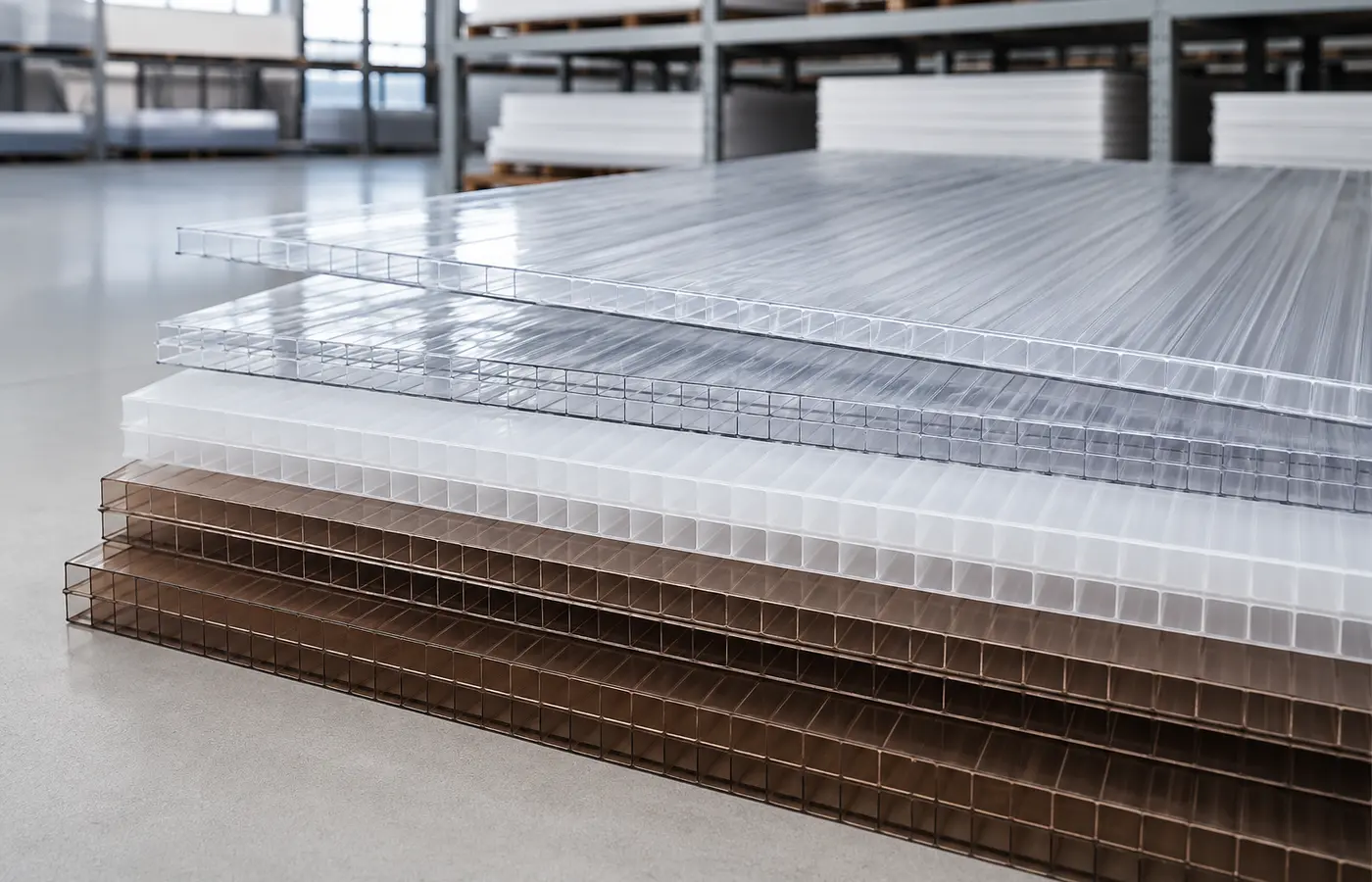
Polycarbonate sheets bring daylight into canopies, verandas, greenhouses, rooflights and façades. Dust, pollen, bird droppings, leaves and airborne coastal salt can accumulate over time. Routine care can improve appearance and light transmission, but the wrong chemical, dry rubbing or a hard tool can permanently dull the surface.
The correct method varies with brand, surface treatment, solid, corrugated or multiwall construction and glazing system. Check the exact product data and care instructions before following general guidance. Never improvise with a stain remover or pressure washer unless the manufacturer specifically permits it.
1. Start by identifying the product and inspecting the surface
Confirm the sheet type, UV-protected face and any special coating. Many products place UV protection on a marked external face; sanding, hard brushing or scraping that surface can damage it. On multiwall sheet, inspect the cell ends, tapes and closure profiles as separate components.
If you find cracking, holes, yellowing, blistering, loose fixings or heavy moisture inside the flutes, cleaning alone is not enough. Incorrect installation, restricted thermal movement, incompatible chemicals, impact or fastener pressure may be involved. If the product is unknown, test any approved method on a small inconspicuous area first.
2. Plan safe access before cleaning
Never step directly on a polycarbonate roof sheet. Even when it appears sound, span, support spacing, ageing and connection condition do not prove that it can safely carry a person. Roof work requires suitable access equipment, fall protection, a working platform and competent personnel.
Avoid windy, wet conditions and very hot surfaces. Manufacturer guidance advises against applying cleaners in direct sunlight because rapid drying can leave marks. In a hot coastal climate, early morning or shaded-surface cleaning generally gives better control and rinsing time.
3. Loosen dry dirt with plenty of water first
Wiping a dusty sheet dry can drag sand across the surface and create fine scratches. Remove loose leaves and twigs without scraping, then thoroughly wet the sheet with clean, low-pressure water. This softens dust, salt and adhered dirt.
Work with the natural roof fall and do not force dirty water into cell ends or protected joints. Confirm that gutters and drains are clear. Use pressure washing only where the sheet manufacturer allows it and at the specified distance and pressure; a close nozzle can puncture or tear the sheet, seals or joints.
4. Use lukewarm water and a soft cloth
For general dirt, begin with lukewarm water and a mild, non-abrasive cleaner approved by the manufacturer. Use a soft cotton or microfibre cloth or a non-scratch sponge, work in small areas and apply minimal pressure. Change or rinse the cloth whenever it collects grit.
Do not leave cleaner on the surface. Rinse immediately and completely with plenty of clean, preferably cool water. If water marks matter, dab gently with a clean soft cloth; do not use a rubber squeegee, razor or sharp scraper. Test the cleaning solution on a concealed spot before treating the whole sheet.
5. Avoid abrasives and strong chemicals
Scouring powder, stiff brushes, metal pads and abrasive compounds can scratch the sheet. Highly alkaline cleaners and substances such as gasoline are also prohibited by manufacturers. A label saying glass cleaner or general degreaser does not prove compatibility with polycarbonate.
Do not select a random solvent for paint, sealant, adhesive or organic stains. Some chemicals can trigger stress cracking, haze or discoloration. Tell the sheet manufacturer the stain and exact product name and request an approved method. Follow the chemical safety data sheet and personal-protection requirements.
6. Do not accidentally seal multiwall drainage paths
Multiwall sheet cell ends are normally protected with system-specific tapes and profiles. The lower end may use a ventilating detail that allows condensation to drain. Blocking these openings with silicone, paint or dirt during maintenance can increase moisture and contamination inside the cells.
If end tape has lifted, a profile has separated or water has entered the channels, wiping the outside is not a complete repair. Tapes, profiles, drainage and joints must be checked against the manufacturer's system detail. Do not blast water or compressed air into the cells; leave disassembly to a competent installer.
7. Inspect fasteners, seals and movement clearances
Check the fixings while cleaning. Inclined screws, split washers, surfaces crushed by over-driving, loose caps and opened joints can admit water. Do not simply tighten every screw: excessive tightening may restrict thermal movement or initiate cracking.
Polycarbonate expands and contracts with temperature. Holes, profiles and edge clearances must accommodate movement as required by the installation guide. If a crack is spreading from a fixing, the sheet appears trapped or the frame deflects, follow the manufacturer’s detail and obtain project-engineer advice. Structural and safety repairs are more than routine maintenance.
8. Keep records and set frequency by exposure
There is no universal cleaning interval. Trees, birds, coastal salt, traffic dust, greenhouse conditions and roof pitch all change the rate of soiling. Inspect regularly and clean before deposits harden instead of relying on occasional aggressive treatment.
Record the date, cleaner used, observed cracks and replaced fixings. Repeated staining or ponding in one area may point to a gutter, slope, joint or nearby equipment problem. Photographs make progression easier to compare and help when requesting technical support.
Information for a maintenance or replacement quotation
If cleaning is not enough or components are damaged, send:
- Brand, product type, colour, structure and thickness where known
- Application, approximate area, roof pitch and access conditions
- Overview and close-up photographs
- Location of dirt, scratches, cracks, yellowing, leaks or internal moisture
- Previously used cleaners and repairs
- Any sheet, profile, tape, fastener or seal replacement required