
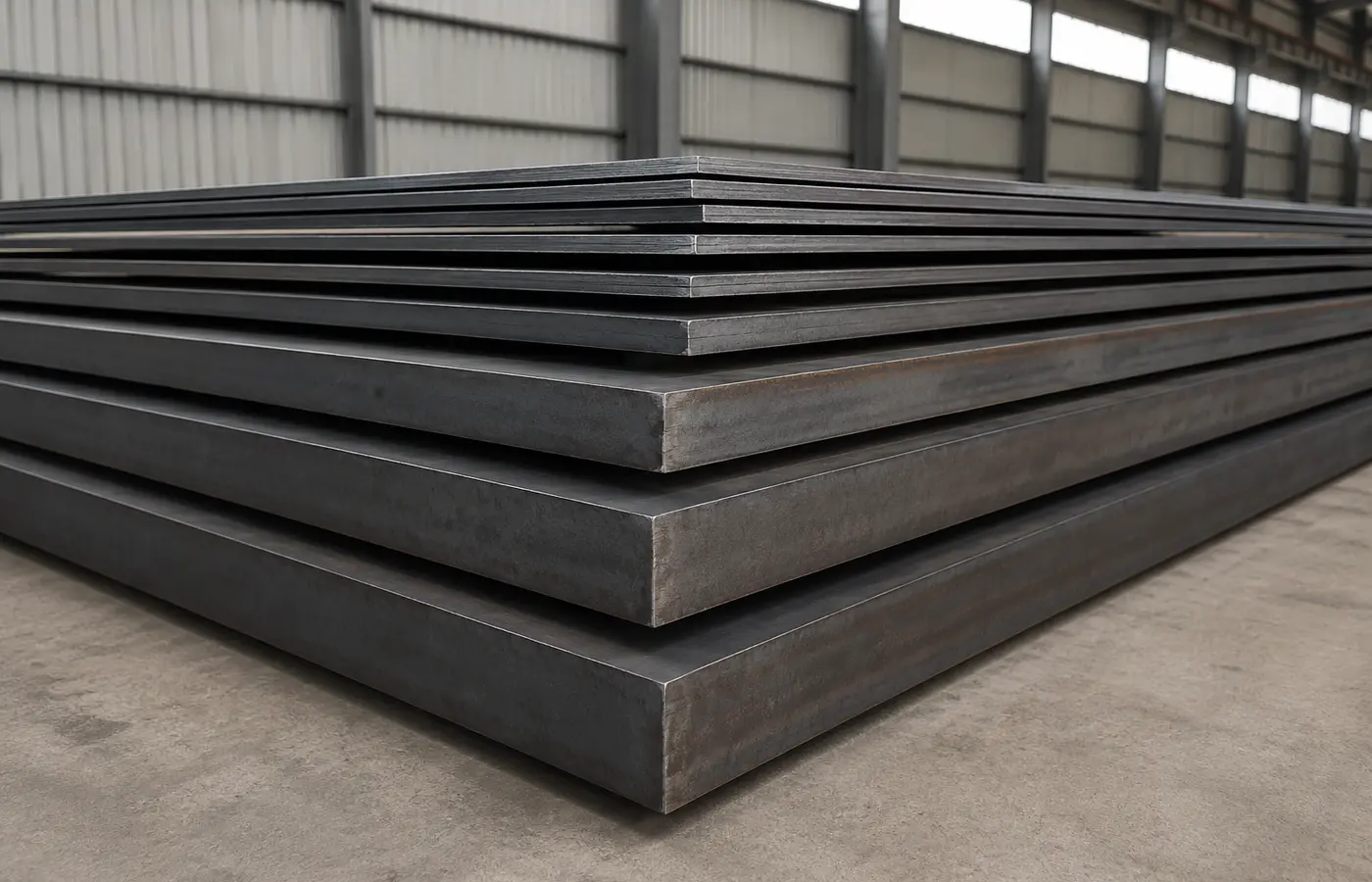
Corrosion often starts in storage
Uncoated hot-rolled, pickled and cold-rolled sheets can corrode when moisture and oxygen meet. A cold pack entering warm humid air may sweat even without rain, while water trapped between sheets dries slowly.
Storage therefore involves temperature, humidity, packaging, supports and stock rotation. SSAB specifically recommends keeping steel dry and avoiding condensation; product-specific supplier instructions take priority.
1. Record the delivery before opening
Match grade, thickness, size, pack number and quantity to the order. Photograph torn wrapping, dents, water marks or rust-coloured runoff and isolate suspect packs.
Do not automatically unwrap very cold steel in a warm store. Let conditions equalise in a controlled way and use temperature and humidity measurements rather than one fixed waiting time.
2. Choose a dry, stable indoor area
Keep sheets away from rain, doorways, roof leaks, wash bays and steam. Raise packs above the floor on suitable supports.
If short outdoor holding is unavoidable, prevent standing water, maintain ventilation and move the pack indoors promptly. A tight cover can trap condensation.
3. Build a level, load-rated stack
Aligned supports prevent sagging and permanent set. Separate incompatible sizes and protect edges.
Set stack height from package weight, rack and floor ratings, lifting access and safety rules—not empty space alone.
4. Deal with trapped moisture promptly
If a pack is wet, the interfaces may remain wet after its exterior is wiped. Separate safely, inspect and dry with airflow.
Do not treat protective oil as a corrosion guarantee. Its retention or removal must suit the product specification and the next process.
5. Protect surfaces during handling
Use correctly rated forks, beams, slings or vacuum equipment selected for the pack. Bare chains, sharp hooks and short fork engagement can damage edges or bend sheets.
Lift rather than drag individual sheets. Keep finish-critical cold-rolled material away from grinding dust, swarf and general scrap.
6. Rotate and inspect stock
Use first-in-first-out where grade and project allocation allow. Keep identity, receipt date, documentation and balance visible.
Inspect leaks, humidity, loose wrapping, edge rust, stains, shifted bearers and rack damage on a planned schedule.
7. Classify rust before use
Loose rust, pitting, scale loss and oil staining are not equivalent. Acceptance depends on the part, finish and engineering requirement.
For critical work, confirm identity, remaining thickness and suitability. Prepare surfaces according to the welding, cutting or coating specification.
8. Link purchasing to storage
State grade, dimensions, tolerances, surface, oiling, package limits and documents in the order. Request manageable pack sizes when storage or lifting capacity is limited.
A receiving record, environmental log, quarantine area, stack plan and nonconformance process make quality and safety more predictable.