
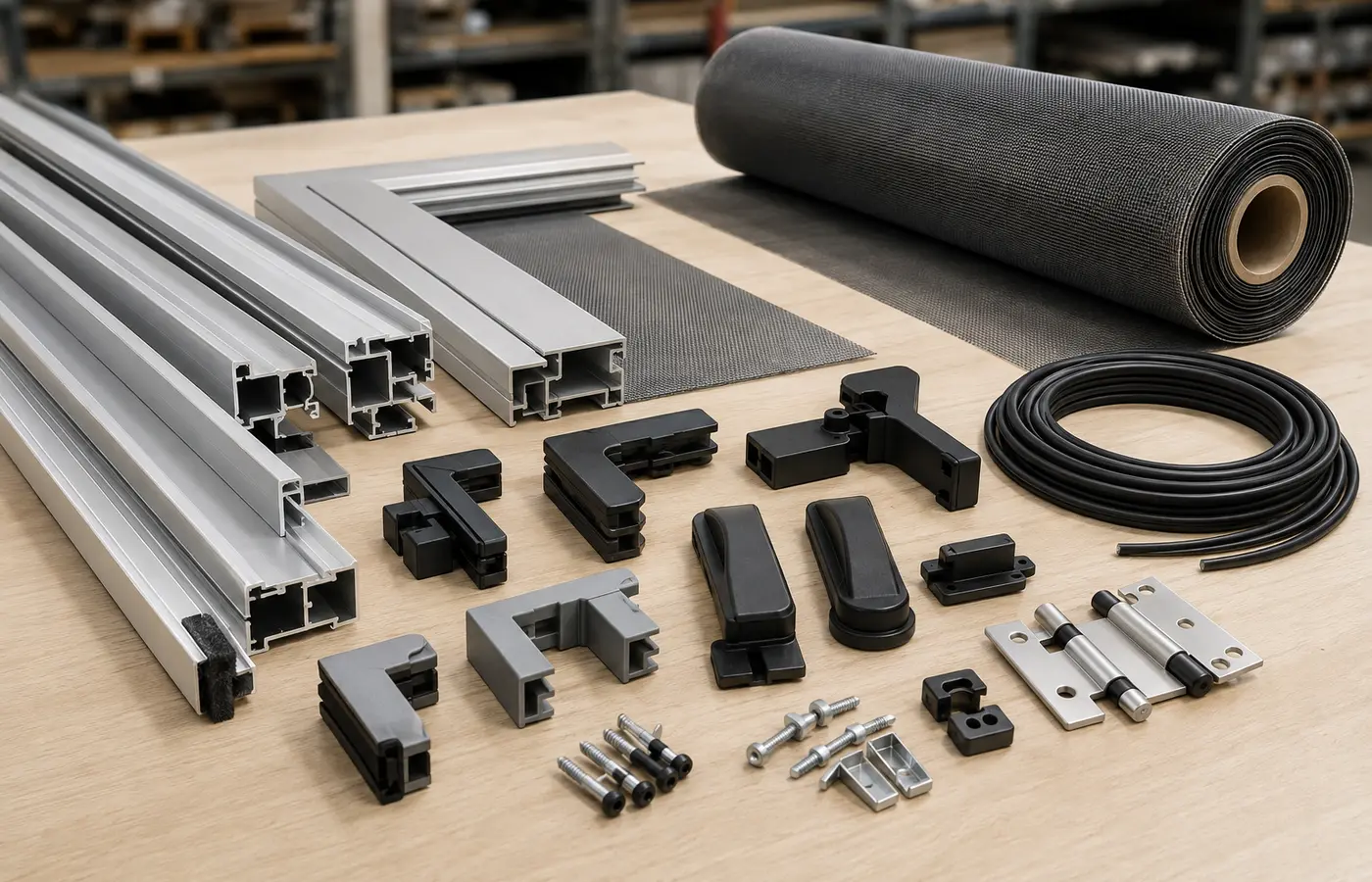
Decide between patching and replacement
A small isolated hole may accept a compatible patch, but large tears, brittle mesh, repeated damage or an edge pulling from the spline call for full replacement. Inspect bent profiles, loose corners, damaged grooves and hardware first; new mesh cannot correct a distorted frame.
Keep a spline sample and measure the groove
Remove the old spline without stretching it and retain a sound sample. Match groove width, mesh thickness and the maker's sizing chart rather than copying diameter blindly. Phifer notes that thicker specialty screens can require a smaller spline; an oversized spline can spread the frame while an undersized one may release.
Work on a flat, clean surface
Lay the removed frame on a clean, non-scratching surface and tape its outer edges without covering the groove. Brush and vacuum debris from the channel. In coastal conditions, wash mesh and frame with mild soapy water, rinse and dry fully before installing new material.
Square the mesh and leave working allowance
Align the weave with the frame and leave the overlap required by the selected product. Phifer and ADFORS instructions use different allowances for their systems, so follow the applicable guide. Do not pre-stretch the mesh drum-tight; excessive tension can bow light aluminium frames.
Roll the spline without damaging corners
Use the proper roller square to the groove. ADFORS describes pre-creasing aluminium mesh with the convex wheel before pressing spline with the concave wheel. Keep the mesh straight, seat every corner carefully and avoid cutting the fabric with screwdrivers or knives.
Control tension progressively
Guide out wrinkles without pulling excessively and check the frame after every side. Diagonal wrinkles can indicate skewed mesh, dragged fabric or a distorted frame. Lift and reset the affected spline section rather than heating or forcing the finished screen.
Trim outside the spline groove
After verifying the entire perimeter, trim excess spline and mesh along the outside edge of the groove as the manufacturer instructs. Direct the blade away from the working mesh, hands and coated frame; wear protection against sharp aluminium strands.
Test operation and maintain gently
Inspect both faces, reinstall the frame and test clips, hinges, rollers and latch without force. Clean with a soft brush, mild soap and clean water; dry the frame and remove coastal salt more frequently.