
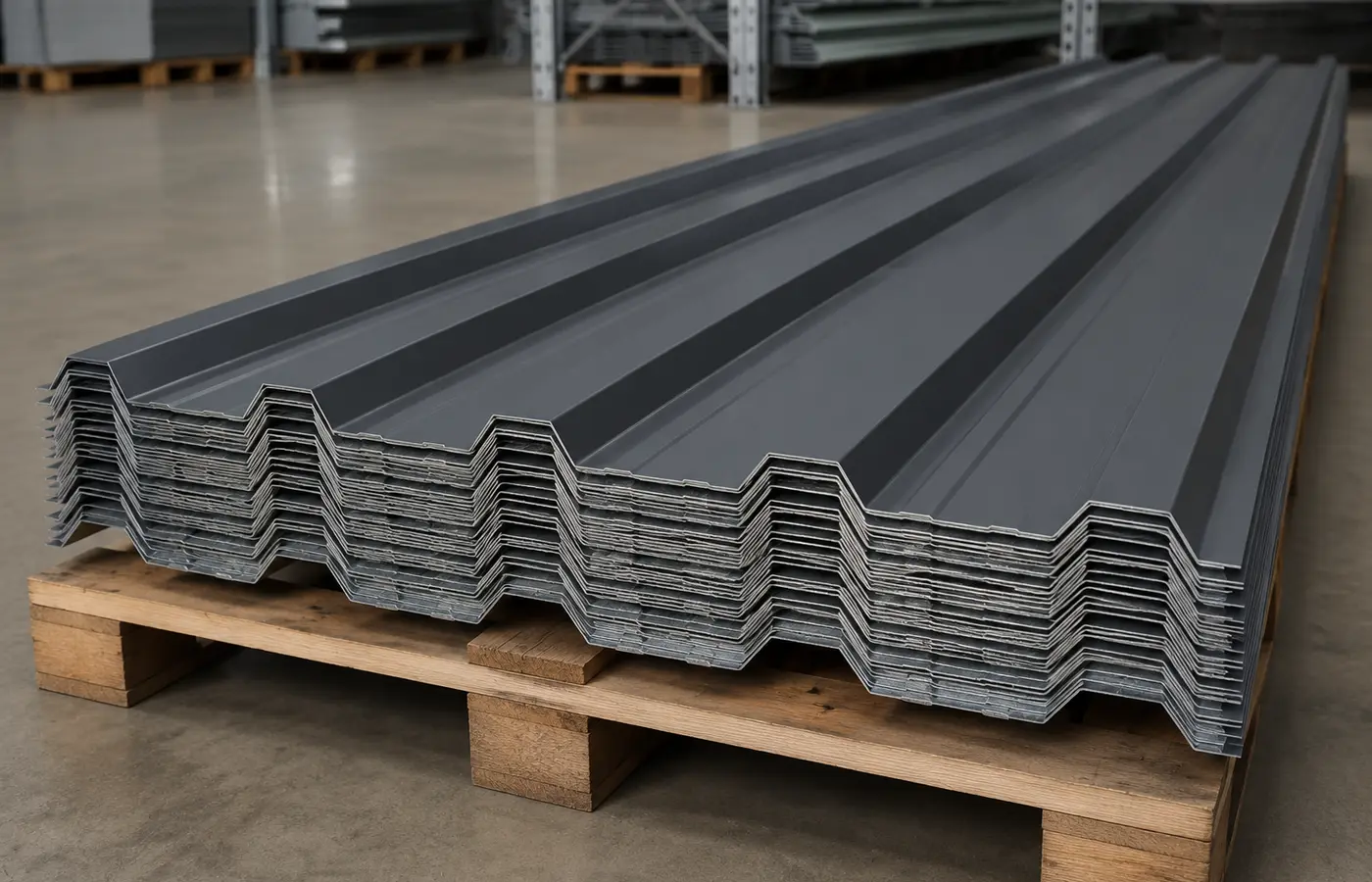
Start with the design and panel system
Profile, thickness, spans, slope, wind and snow actions, edge zones, substrate and drainage must be coordinated. Do not choose panel length, fastener layout or laps from habit alone.
The Metal Construction Association describes attachment as a load chain. Sheet, fastener, washer, purlin and structure work together, so project drawings and the current manufacturer guide govern the detail.
Verify supports and water direction
Check purlin alignment, level, width and bearing surface before laying panels. Correct distortion, weld spatter, burrs and coating damage first.
Set out eaves, ridge, valleys, gutters and penetrations, then establish a true reference line. Choose the laying direction so side laps and the final panel follow the project weathering detail.
Protect panels during handling
Store bundles dry, ventilated and evenly supported above ground. Do not drag sheets or trap water in closed packs; arrange lifting points to prevent long panels from buckling.
Remove protective film within the stated period. Use the approved walking route, fall protection and rescue plan; metal roofing can be fragile and slippery.
Build laps to shed water
Side and end laps depend on profile, slope, exposure and the manufacturer's system. Place upper sheets shingle-fashion so water discharges onto the exterior of lower sheets.
Sealant and tape cannot rescue a poor lap. Apply the specified compatible product continuously to clean, dry surfaces and in the exact weather-side sequence shown in the detail.
Match fastener, washer and substrate
Select drill point, thread, length, head, coating and washer for both panel and steel or timber support. Stitch screws do not replace primary structural fasteners.
Fastener quantity and pattern depend on spans, wind loads, edge zones and capacity. Kingspan likewise requires project-specific calculation rather than a universal spacing rule.
Drive square without crushing the washer
Drive perpendicular with the correct speed, socket and depth setting. Overdriving deforms the washer and sheet; underdriving leaves movement and a possible water path.
Repair missed holes only with an approved detail. Remove drilling swarf immediately and inspect washer compression, screw alignment and local dimpling at the end of each work period.
Keep drainage continuous at details
Use a manufacturer-approved cold-cut method and protect adjacent sheets from hot particles and swarf. Treat cut edges only as the product system requires.
Ridges, eaves, abutments and penetrations need lapped flashings, closures and continuous air and water control. Roof equipment requires engineered load transfer, movement and waterproofing details.
Inspect and document before handover
Check alignment, laps, fastener pattern, washers, gutters, flashings, penetrations and debris from ridge to eaves. Follow the project procedure for any water test.
Photograph concealed seals during installation and retain product records and approved repairs. Maintenance should look for loose fasteners, failed washers, coating damage and blocked drainage.