
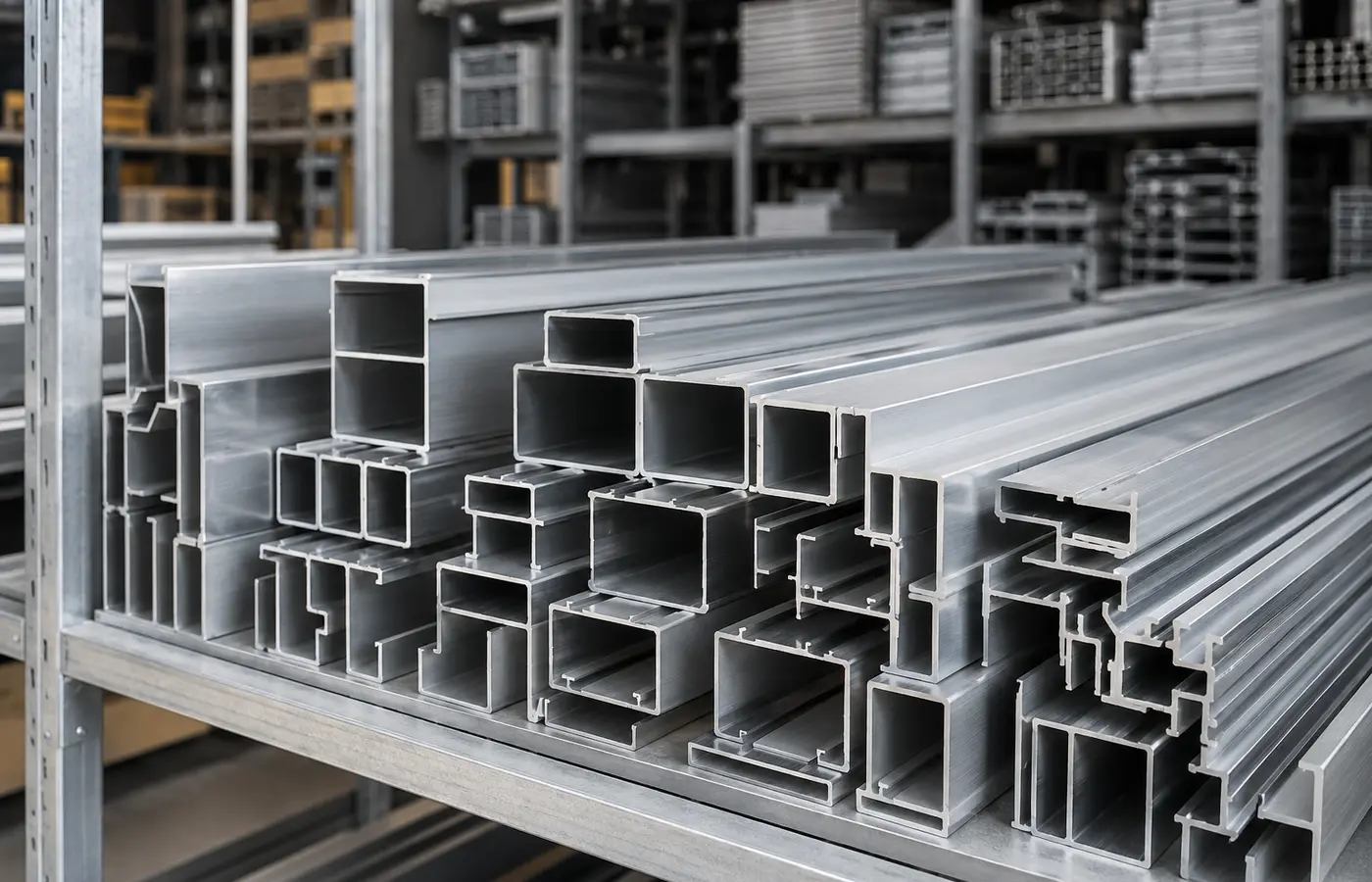
Lightweight profiles still need sound detailing
Aluminium is light, workable and protected in many environments by its oxide film. That does not make every section structural or every fastener compatible.
Alloy, temper, wall thickness, finish and geometry work together. Manufacturer systems and engineering design govern safety-critical work.
1. Define the profile identity
Specify section code, alloy, temper, wall thickness, length, tolerances, finish, film and documents. Similar-looking channels may accept different accessories.
Do not infer structural capacity from weight alone; span, supports, wind and connection details matter.
2. Establish cutting references
Mark the visible face and allowance, verify saw stops on a sample, clamp without crushing and use a suitable sharp blade.
Remove burrs and chips from faces and channels. Keep embedded steel grinding debris away from aluminium surfaces.
3. Plan holes and fasteners
Edge distance, wall thickness and rear support matter as much as screw diameter. Over-tightening can crush thin walls or strip threads.
Self-drillers, rivets, rivet nuts, channel nuts and brackets transfer load differently. Consider access, vibration, sealing and maintenance.
4. Control dissimilar-metal contact
Aluminium touching steel, stainless steel, copper or brass in the presence of an electrolyte may suffer galvanic corrosion. Risk depends on the pair, area ratio, coating and wet exposure.
Approved isolating washers, bushes, tapes, gaskets or coatings can interrupt contact and moisture paths. Follow the system compatibility table.
5. Avoid water traps
Channels and horizontal joints may retain water. Place drainage and ventilation features only where the system drawing permits.
Sealant does not replace drainage. Confirm chemical compatibility and keep drainage routes open.
6. Allow thermal movement
Long profiles expand and contract. Locking both ends can cause bowing, seal compression or fastener distress.
Define fixed and sliding points, movement direction and installation gaps in the design; record installation temperature.
7. Protect the visible finish
Retain protective film only as permitted, avoid dragging, and isolate profiles from mortar, harsh cleaners and metal swarf.
Use manufacturer-approved cleaning and repair methods. Have deep scratches or dents assessed rather than treating them as cosmetic only.
8. Complete a handover check
Verify dimensions, diagonals, fasteners, seals, drainage, movement and surface condition. Test moving panels and remove sharp edges.
Record profiles, accessories, fasteners, sealants and repairs, and photograph concealed joints before closing them.