
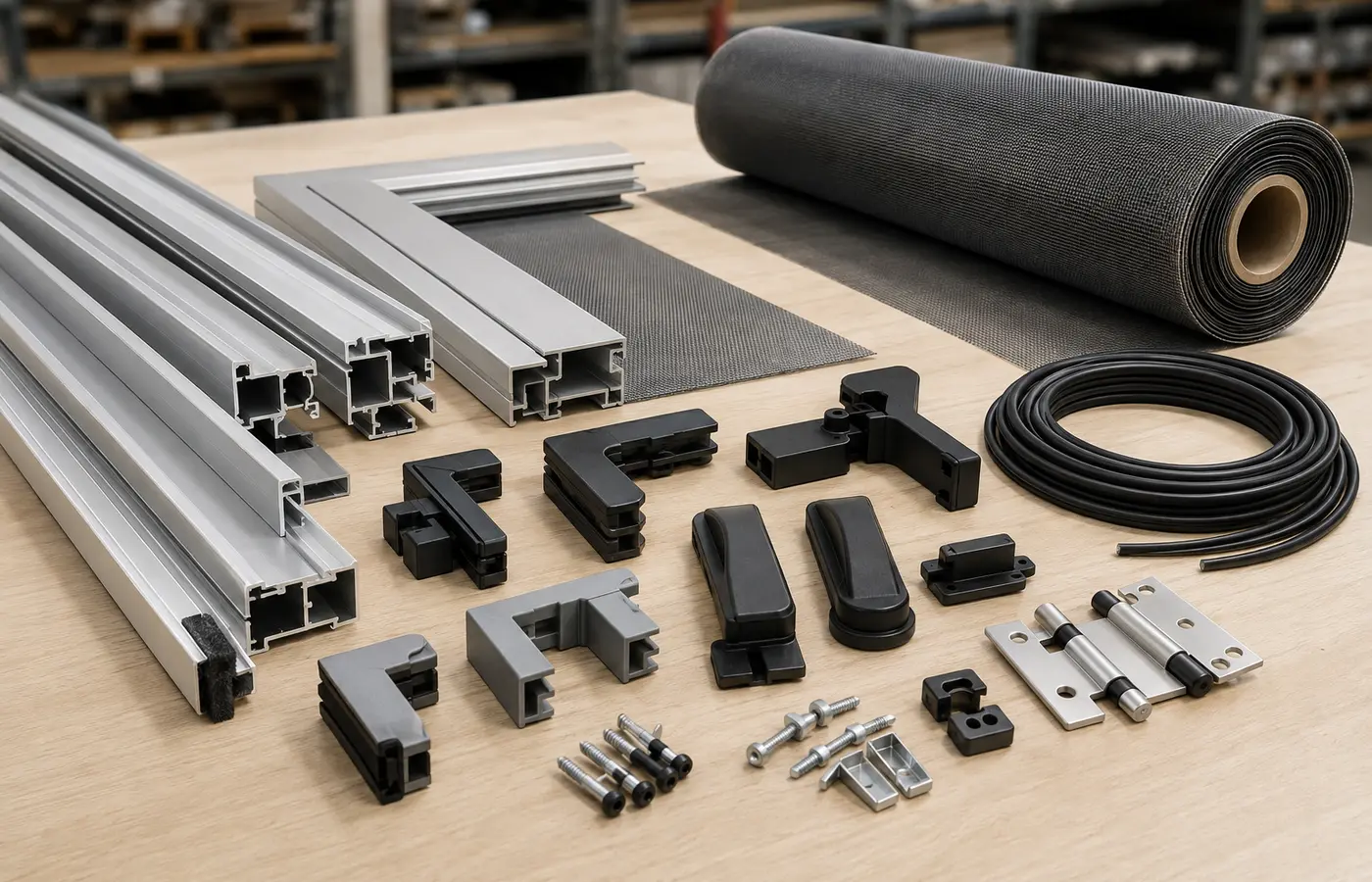
A good screen begins with the correct finished size
The frame location, opening method and removal clearance must be defined before measuring. Check handles, shutters, hinges and the window swing.
Measure width and height at several points. Use the profile system's specified clearance rather than subtracting an arbitrary allowance.
1. Choose the installation type
Decide whether the frame sits inside, on the face or in a separate track. Fixed, hinged and sliding systems use different accessories.
Record dimensions in millimetres and label width and height clearly on a sketch.
2. Match profile, corners and spline
The channel, corner key and spline diameter must work together. Mesh thickness also affects spline selection.
Fibreglass, aluminium, pet-resistant and fine insect mesh differ in stiffness and airflow; follow the relevant product data.
3. Prepare and cut the profiles
Account for corner-key engagement when converting the finished frame size into cut lengths. Make a trial corner before cutting every piece.
Use suitable aluminium-cutting equipment, secure stops and eye protection. Remove swarf and sharp burrs without damaging the spline channel.
4. Assemble square on a flat surface
Seat corners evenly and compare both diagonal measurements. Correct the frame before fitting mesh.
Position hinges and handles so fasteners do not enter the spline channel or interfere with the window hardware.
5. Tension the mesh evenly
Cut the mesh with working allowance and align its weave with the frame. Do not pull it drum-tight at the start.
Balance tension progressively across opposite sides. If a wrinkle forms, lift a section of spline and redistribute tension instead of forcing the last edge.
6. Roll the spline into the channel
Use a spline roller rather than a pointed screwdriver. If insertion needs excessive force, recheck spline diameter, mesh thickness and burrs.
Inspect for bowed profiles and open corners before trimming the mesh.
7. Trim safely
Cut surplus mesh along the outside of the spline without cutting too close or scratching the profile. Keep hands out of the blade path.
Remove loose strands and sharp wire ends and correct local slack before final installation.
8. Fit and maintain
Install without forcing and check perimeter gaps, retainers, hinges and handle clearance.
Clean by the mesh manufacturer's recommended method and inspect spline, corners, hinges and tears each season.