
Confirm the exact membrane system
APP, SBS, torch-applied, self-adhered, hot-asphalt and cold-applied membranes do not share one universal storage or temperature rule. Match the product label, data sheet, safety sheet and project assembly before setting conditions.
Record product, batch, roll size, date, surfacing, packaging and visible damage. Quarantine crushed, wet, opened or distorted rolls rather than assuming they will recover.
Store rolls upright, dry and protected
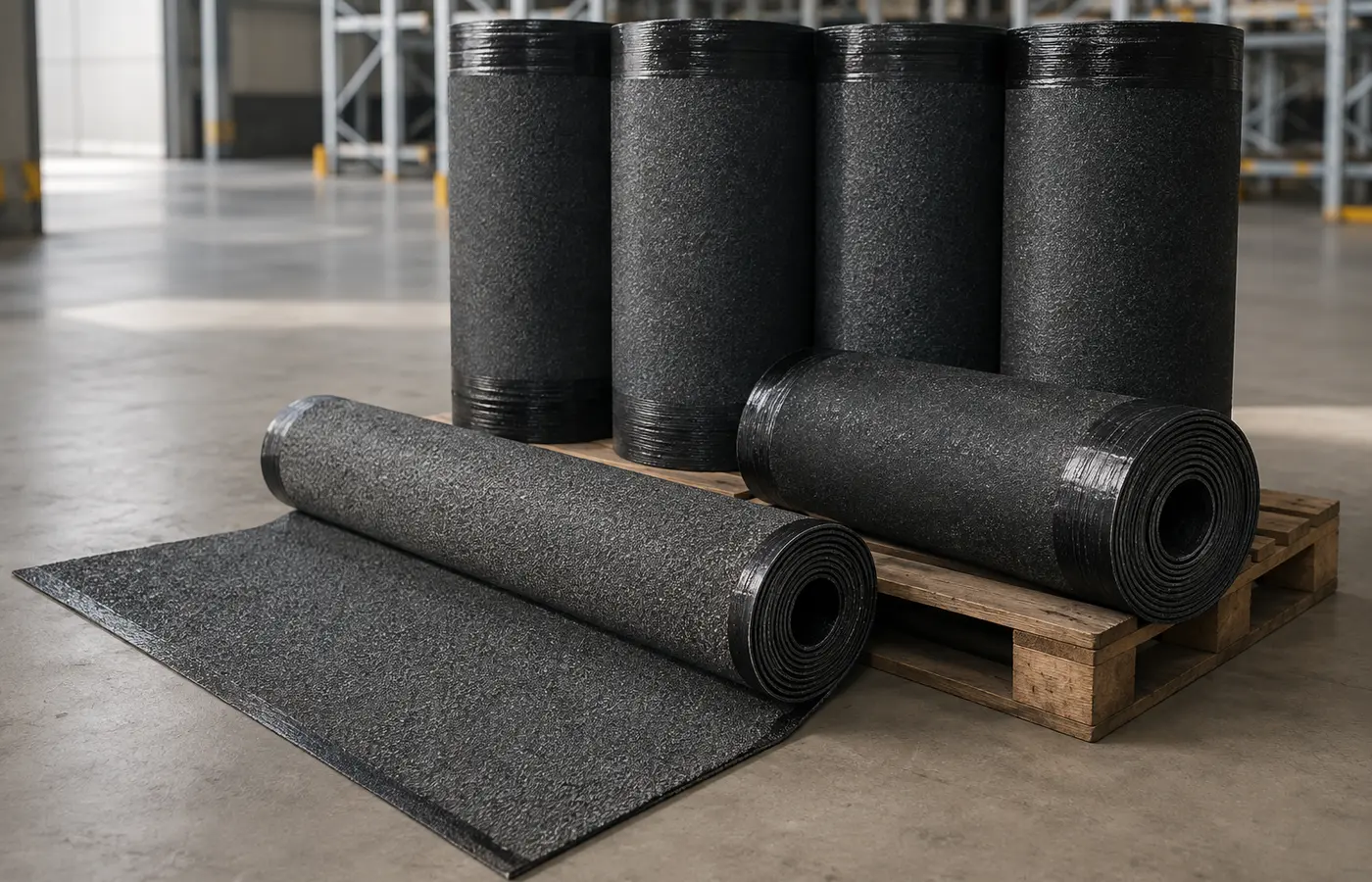
SOPREMA and IKO documents instruct that rolls be stored upright. Keep them on sound pallets in a clean, dry, level area away from standing water and sharp objects. Do not exceed the manufacturer's stacking limit.
Protect from extreme heat and cold, direct sun, UV, moisture and dirt. For permitted outdoor storage, retain original packaging and use the specified opaque breathable protection without trapping water.
Protect shape and surfaces during handling
Do not throw, drag or crush rolls with slings. Use suitable lifting equipment and assess concentrated roof loads before staging pallets. Keep rolls upright on the roof until use.
Do not place rolls on screws, swarf or hot tools. Leave release liners intact until alignment and return unused material to protected storage at the end of the shift.
Condition cold materials correctly
Cold bitumen can stiffen, wrinkle or lose initial tack. Product-specific minimum temperatures apply, particularly to self-adhered sheets. Never transfer one manufacturer's limit to an unidentified roll.
GAF and IKO recommend heated storage for applicable cold-weather work and removing rolls only as they are installed. Do not improvise direct-flame warming that can damage the coating, reinforcement or liner.
Check more than air temperature
Monitor air and deck temperature, wind, humidity, dew, frost, rain and the forecast. IKO requires work to stop when water, dew, frost or snow is present because adhesion loss or blistering can result.
Reassess conditions during the day. Open only an area that can be safely completed and weathered in the same work period.
Prepare a dry, clean and compatible substrate
Remove dust, grease, loose material, sharp projections, ice and water. Verify the moisture condition of new concrete or screed by the project-approved method rather than calendar age alone.
Primers, adhesives and sealants have their own storage and temperature limits. Protect water-based products from freezing and follow ventilation and flash-time requirements for solvent products.
Relax, align and dry-fit the roll
Where the product instructions allow, unrolling and relaxing cold rolls can reduce wrinkles. Dry-fit direction, laps, end joints, outlets and upstands before committing the sheet.
Do not remove a self-adhered liner before alignment. Use a cutting surface that cannot damage newly installed membrane and never pull a skewed roll straight under tension.
Treat the first sheet as a field check
Inspect adhesion, lap continuity, wrinkles, damage and the specified rolling or heating result. If self-adhered laps do not bond, stop and reassess temperature, substrate, primer and material condition.
Record batch, storage, weather, deck temperature, dryness, primer and installed area. Reliable work combines correct storage, controlled conditioning, a dry substrate, a suitable weather window and the selected system's instructions.