
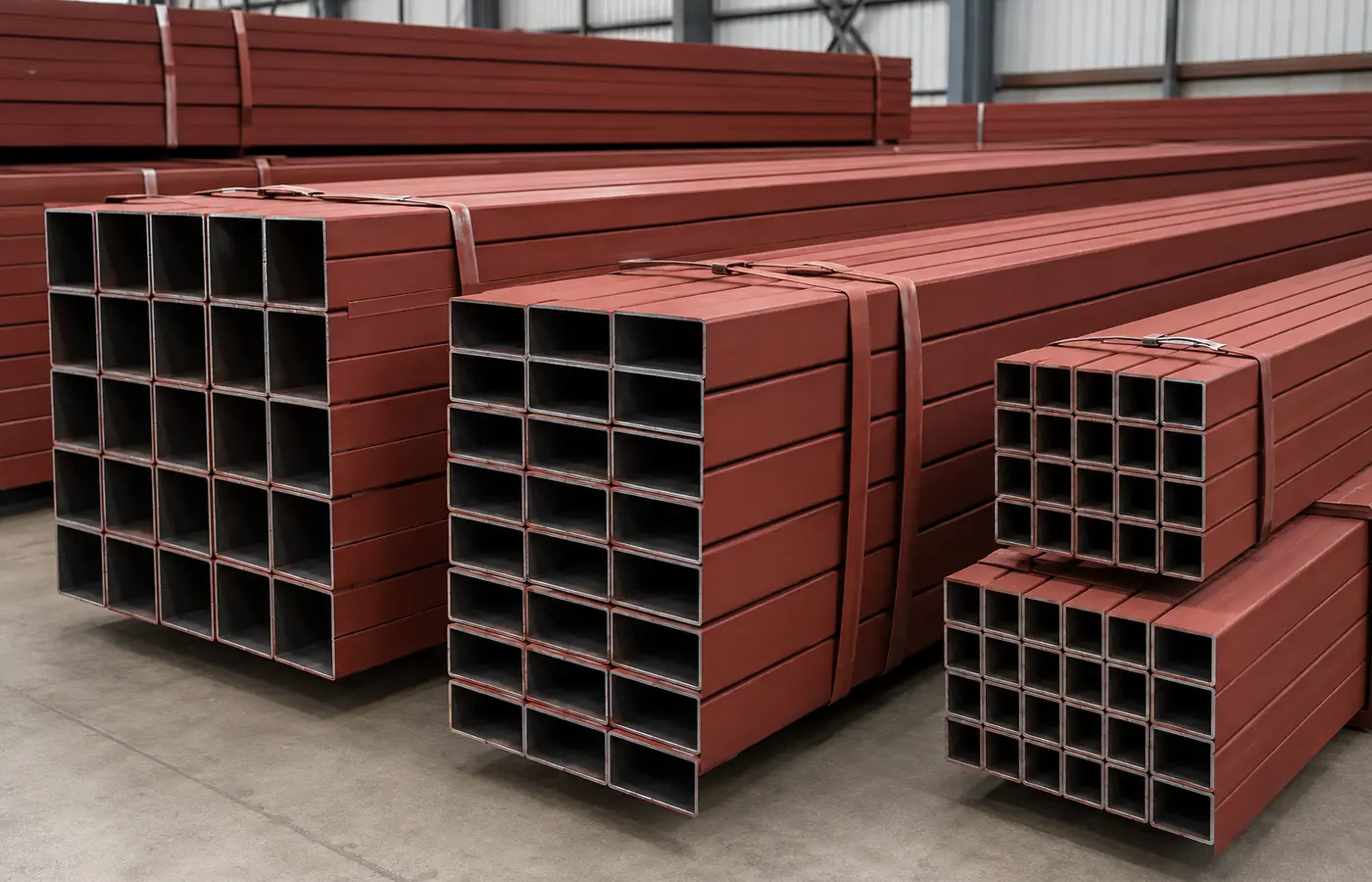
Do not mistake shop primer for a finish coat
The red coating may provide temporary protection and a base for a later system, but colour alone does not prove coating chemistry, thickness, exterior durability or topcoat compatibility. Confirm the product information and intended finishing system with the order.
Cutting, drilling, grinding and welding remove or heat-damage primer locally. Final protection must therefore follow the service environment, specification and coating maker's current data sheet rather than the assumption that the section is already finished.
Record condition at receiving
Check dimensions, wall thickness, length, quantity and labels. Photograph scratches, water trapping, blistering, adhesion loss, corrosion and oily contamination before fabrication begins.
Store sections above the ground on aligned supports and avoid trapping moisture beneath airtight covers. Separate unidentified or seriously damaged material until an authorised review is complete.
Plan cuts around later access
Include mitres, weld preparation, closures, holes and assembly sequence in the cutting plan. Define corrosion protection for internal faces that will become inaccessible before the box is closed.
Support the section without crushing it, control sparks and heat, deburr cut edges and promptly remove metal swarf. Do not grind sound primer away from a broad area without a technical reason.
Prepare the weld zone to the specified system
Never assume a normal transport primer is a weld-through product. The weld procedure, coating manufacturer and project specification must define how much coating is removed and what may remain between mating faces.
Remove oil, moisture, rust, loose paint and dust. Verify cleaners against the coating data and safety sheets, and manage ventilation, ignition sources and PPE before using solvents.
Control hot work, fumes and fire
OSHA welding rules require hot-work areas to be made fire-safe, suitable extinguishing equipment to be available and fire watchers to be used when conditions require. The composition of fumes from painted steel depends on the coating.
Review the safety data sheet and determine effective ventilation before welding coated steel. Keep away from the fume plume and use correctly positioned local extraction. Enclosed sections, confined spaces and previously contaminated parts require specific assessment.
Manage weld sequence and distortion
Trial-fit, tack symmetrically and plan the sequence to limit distortion without reducing weld size or continuity contrary to the design. Uncontrolled heat can deform the frame and burn a much wider coating area.
Check diagonals, plane, twist and joints during fabrication. Remove spatter safely, but do not hide cracks, porosity, incomplete fusion or excessive distortion beneath paint.
Build a sound surface before touch-up
Remove burnt primer, loose coating, corrosion, spatter, oil and contaminants to the preparation grade required by the selected system. Feather sound coating edges and remove dust.
Coat prepared steel promptly within the maker's temperature, humidity and condensation limits. Similar colour does not establish compatibility; primer, intermediate and finish coats must form an approved system.
Apply measured coats and document release
Follow specified mixing, thinning, application, recoat interval and dry-film thickness. Avoid one heavy coat; edges, welds, holes and cut ends may need a stripe coat where the system permits.
Allow curing before handling, then inspect dimensions, weld acceptance, coating continuity, bare edges, runs and impact damage. Record products, batches, conditions and repair photographs for maintenance traceability.