
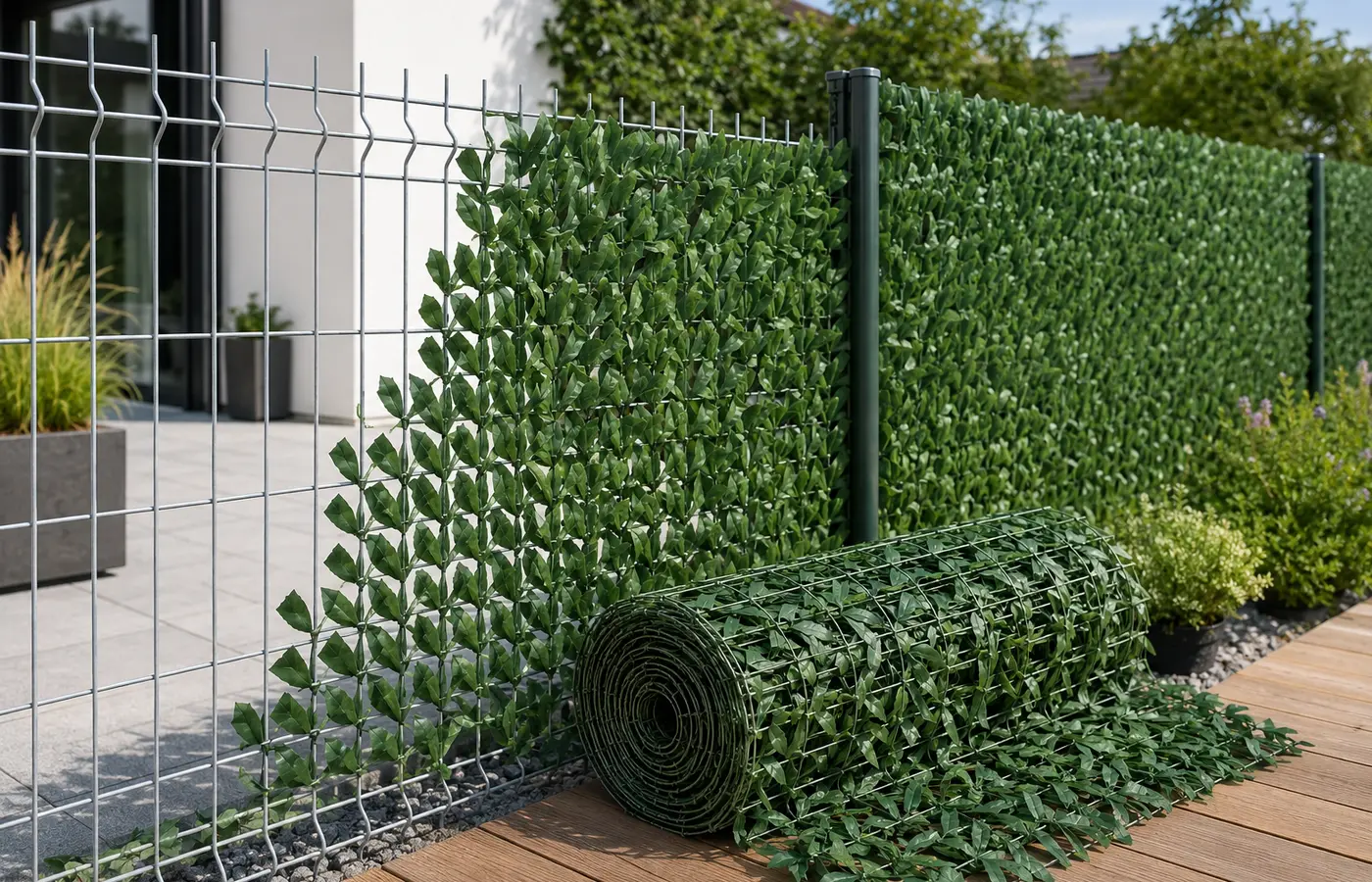
Screening changes the fence
Artificial hedge screening reduces visibility but catches more wind than open mesh. Posts, anchors, mesh and fixings must suit the changed surface.
Coastal, corner, elevated and public locations need particular care. Have safety-critical installations checked by a competent specialist.
1. Inspect the existing support
Check bent posts, loose bases, cracked concrete, failed welds, sagging mesh and corrosion before covering them.
Keep gates, hinges and locks free; the extra wind area may also affect gate hardware.
2. Plan rolls and joints
Measure height, length, corners, gates and level changes. Open rolls on a clean surface and check direction, shade, damage and dimensions.
Place joints on sound support lines and align fibre direction without excessive overlap or open gaps.
3. Temporarily hang the top
Use several temporary top fixings, align to a level reference, then open the roll naturally. Do not overstretch or leave it slack.
Use two people for large rolls and avoid opening them in strong wind.
4. Select outdoor fixings
Use manufacturer-approved clips, coated wire or UV-rated ties as appropriate. Keep cut or sharp ends away from people.
Fix through the product backing mesh to the fence, without cutting the mesh through over-tightening.
5. Do not guess fixing spacing
Spacing depends on product backing, height, support grid, exposure and manufacturer instructions. Free edges, corners and joints may move more.
Critical wind resistance requires a designed support and fixing schedule.
6. Finish cuts safely
Mark cuts, use a suitable sharp hand tool and secure the backing before removing offcuts.
Keep access to handles, meters, drains and safety equipment, and remove sharp wires and tie tails.
7. Preserve drainage and access
Do not block drains or trap the lower edge in wet soil. Allow inspection and cleaning access.
Consider plant growth, irrigation, property boundaries and local visibility or height rules.
8. Inspect after storms
Check alignment, joints, corners, gates and fixings at handover and photograph the result.
After strong wind, investigate loose ties, torn backing, leaning posts or moving anchors rather than hiding a support fault with more ties.