
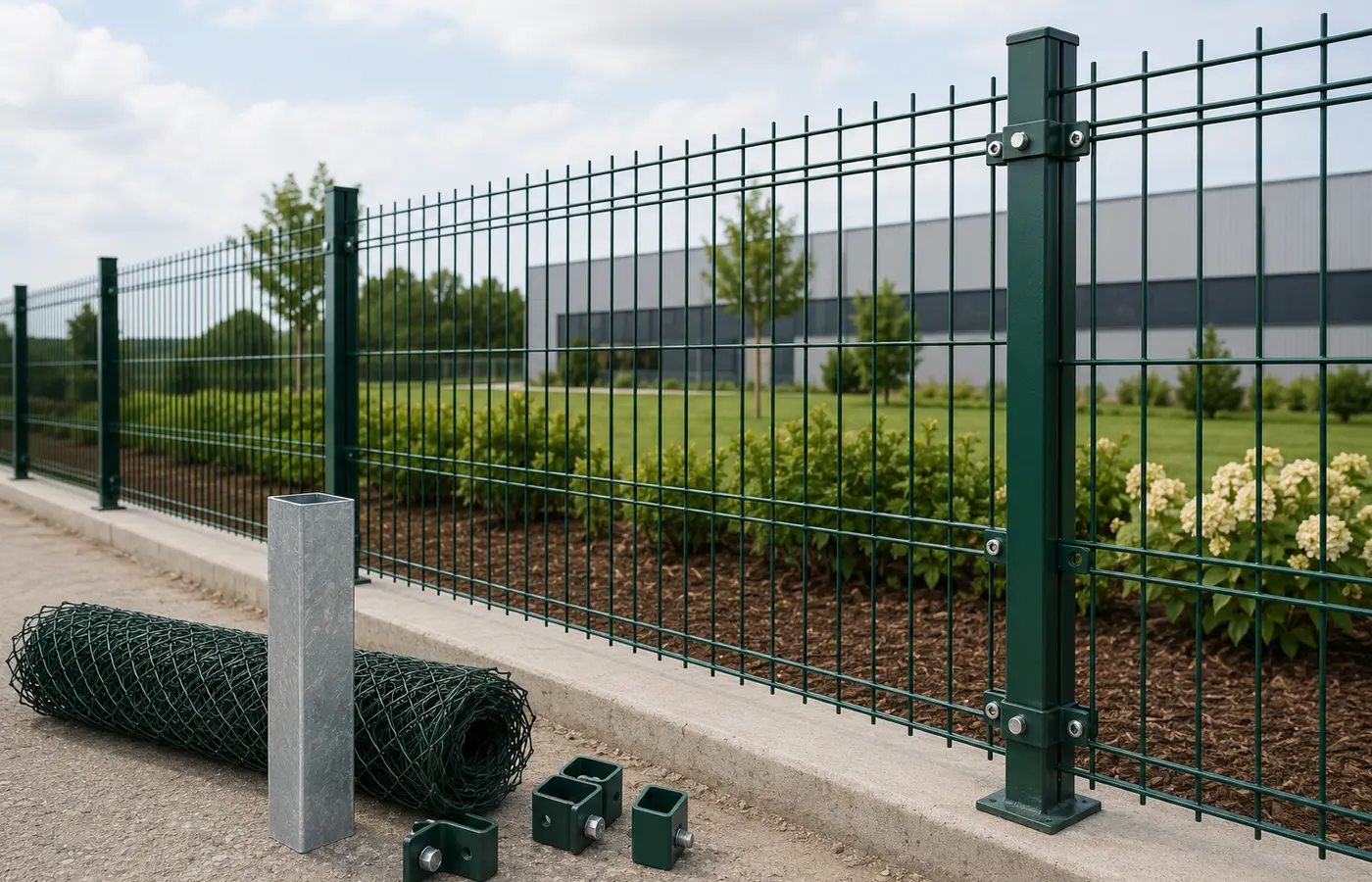
The first post controls the last panel
Panel width alone is not post centre spacing; fittings, post width and tolerance create the true module.
Foundation and spacing are project-specific, depending on height, wind, ground, coating and gates.
1. Verify boundary, line and buried services
Confirm the legal boundary and local rules, then locate electricity, water, gas and communications before excavation.
Fix ends, corners and gate centres, establish the finished face line and survey levels before choosing stepped or sloping panels.
2. Derive centres from real components
Trial one panel between two posts with its actual brackets and measure centre to centre.
Divide the total run before drilling; plan any cut panel and its edge protection rather than leaving a short final bay.
3. Treat corners and gates separately
Corner and end posts take unbalanced forces; gate posts also resist leaf weight, hinge moment, impact and wind.
Coordinate hinges, locks, stops, motors, services and drainage before concrete work.
4. Size embedded footings for soil and load
Diameter and depth depend on height, spacing, wind, soil, frost and water. Do not copy one generic footing size.
Brace posts plumb in two directions, shed water away at the top and wait for adequate concrete strength before loading.
5. Anchor base plates only to suitable concrete
Thin screed, hollow block or damaged edges are not reliable bases. Engineer anchor embedment, spacing and edge distance.
Seat plates properly, scan reinforcement and follow the anchor's hole cleaning, torque, temperature and cure instructions.
6. Check every module
Use a string for line and a level or laser for every post; prevent cumulative centre errors.
Maintain the specified ground clearance and tighten brackets evenly without distorting panels.
7. Protect coatings
Cutting, welding and impacts damage galvanized or painted layers. Use the manufacturer's repair system.
Select compatible fastener metals and inspect loose joints, cracked footings, trapped water, coating damage and gate alignment.
Site checklist
Confirm:
- Boundary and services
- True panel module
- Corners and gates
- Wind, soil and footing design
- Embedded or anchored post detail
- Cure and alignment
- Panel direction and fittings
- Repair, drainage and maintenance